
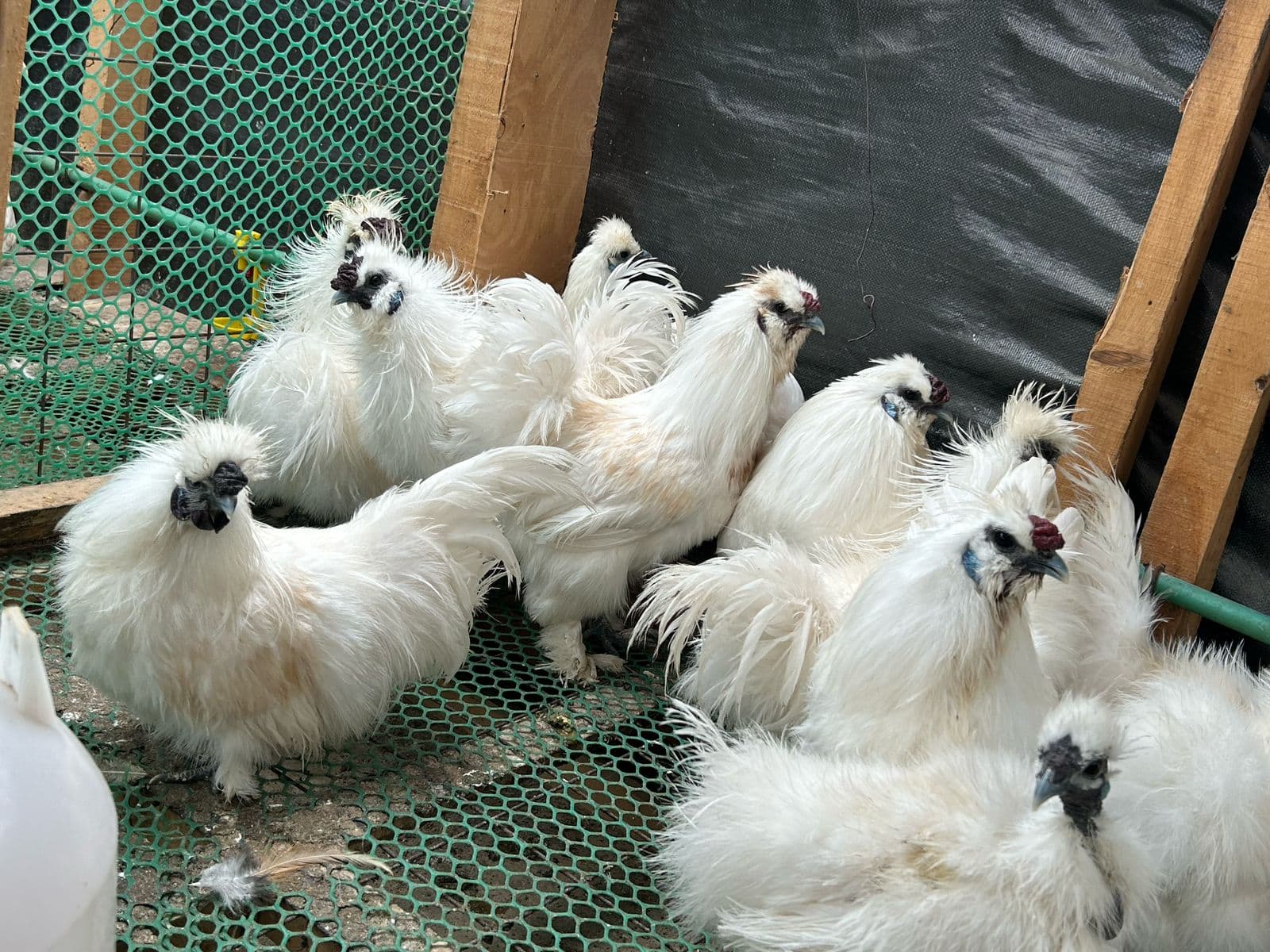
Silkie Chickens: Everything Chicken Owners Should Know
Let's Learn About the Silkie
Silkie chickens originate from Asia, though there is still some debate on their exact country of origin. Interestingly, certain Eastern cultures believed the Silkie chicken had medicinal powers because of their dark skin. The breed was first introduced to Western cultures when Marco Polo reported seeing chickens with ‘hair like a cat’ during his travels to the region in 1298.
The American Poultry Association recognized Silkies as an official chicken breed in 1874. Then, in the 1900s, Silkies were a common part of traveling circuses and were touted as chickens who had “fur” instead of feathers. Since then, people have come to know Silkie chickens for their docile personalities and excellent pet-like qualities.
Raising Silkie Chickens
There are a few key features of the Silkie chicken that have made them a popular backyard chicken breed. Here are some practical reasons why many flock owners decide to add Silkie chickens to their backyard:
Temperament- Silkie chickens have a very laid-back temperament that makes them docile, friendly, and sometimes affectionate. Silkies may even imprint on their human caregivers, following them around and chattering to them. Their calm demeanor allows them to adapt to confinement well, and they don’t mind living indoors.
Social Behavior- Silkie chickens do not have a dominant or assertive personality, which means they are often at the bottom of the pecking order in a flock of mixed chicken breeds. Silkies tend to do well in a flock of just Silkie chickens or in a mixed flock of other friendly, docile chicken breeds. They do make excellent pet chickens and can even thrive in a solitary setting if their caretakers give them enough attention. Silkie chickens are often ‘diaper trained’ and taught to walk on a chicken harness and leash. This makes them excellent therapy chickens that are safe to bring in nursing homes or schools for teaching purposes.
Manageable Size- Another feature that makes Silkie chickens so popular is their small size. The original Silkie chicken was bred to be standard size, but this variety is more common in the UK. In the United States, Silkies were bred for a smaller size and are now more bantam size. Here are the average breed standard weights for both bantam and standard-size Silkies:
Bantam- Cock: 36 oz. Hen: 32 oz.
Standard- Cock: 4 lbs. Hen: 3 lbs.
Their size makes them more suitable for small backyards or even indoor situations. Silkies don’t need as big of a coop as standard-size chickens do, and they also eat less as a result.
Considerations Before Adopting Silkies
There are also some potential challenges that come with raising Silkie chickens. Before you add this breed to your flock, consider how you might handle the following issues.
Vulnerability- Silkies are more vulnerable to predators due to their limited vision and poor flying ability. The crest of feathers on a Silkie’s head will often grow out and become so fluffy that it can inhibit proper vision, so you may need to trim the area around their eyes to make a clearer sight path. They also need adequate ground shelter since they cannot easily fly away from danger.
Sexing- Silkies are very difficult to sex. When buying Silkie chicks, you often don’t have the choice of buying just pullets since they are commonly sold as straight-run chicks. This means you could end up with both roosters and hens without any easy way to tell them apart. It is easier to sex Silkie chickens once they have matured and you can more easily distinguish the roosters apart from the hens. Obviously, the most accurate way to sex Silkie chickens is to wait until he crows or she lays an egg!
Low Production- Silkies are not the best egg producers compared to other chicken breeds. A Silkie hen will only lay around 100-120 eggs a year and her desire to go broody can also interrupt her laying.
Fair Weather- Silkie chickens don’t thrive in wet, cold, or muddy environments. The feathers on their feet can get matted with mud or moisture, which can freeze during cold weather and lead to frostbite. Plus, their fur-like feathers do not shed water like regular feathers, so it is important that they stay dry. They also struggle in areas with extreme heat. Since their feathers do not have a rigid feather web, they are not as effective in insulating the Silkie against hot or cold weather.
Silkie Chickens and Their Uses
Silkie chickens are appealing for a variety of reasons beyond the fact that they are fluffy, cute, and friendly! Silkies can be a practical addition to your backyard flock even if they don’t lay a basket full of eggs.
Hatching & Raising Chicks- As we mentioned earlier, Silkie hens will brood like nobody’s business. They LOVE to set on eggs and hatch chicks. They don’t care if the eggs hatch out ducklings, goslings, or keets, either! If you want to get into hatching your own chicks, a Silkie hen can help and make the learning curve a lot simpler. Many poultry breeders will have a Silkie hen or two just for the purpose of hatching out chicks.
Showing- Silkies make great show chickens, either for exhibition or showmanship. They are a great choice for youth showers since they are small, friendly, and don’t weigh very much. Silkies are a popular option even for professional poultry showers since Silkies don’t require a lot of space or feed. How could a judge resist the fluffy, cute appearance of a well-groomed Silkie?
Therapy Chickens- Silkies also make great therapy chickens because of their size and temperament, and the fact that they can be diaper trained, wear a chicken harness, and walk on a leash. Even if you don’t train your Silkies to be therapy chickens, just watching and interacting with your Silkies will provide therapy for you!
Caring for Silkies
You can care for Silkie chickens much like you would any other chicken breed. However, there are a few considerations that you should know about that will help you keep your Silkies healthy and happy.
Coop Design- Like any chicken, Silkies will need a chicken coop. The coop should be predator-proof, provide protection from the weather, have absorbent litter, and feature roosts and nesting boxes. Even though Silkies are small, they still need plenty of coop space to stay healthy and active. Allow 4 square feet of coop space per standard Silkie and at least 8-10 square feet of run space per standard Silkie. Bantam Silkies can manage 2 square feet of coop space per bird and 4-5 square feet of run space per bird.
Since Silkies can’t fly very well, they need roosts and nesting boxes that are low to the ground, typically 8-16" high at maximum. The chicken door that allows your Silkies to enter and exit their coop should also be close to the ground or paired with a ramp. Keep the chicken coop run covered to protect your Silkies from rain and snow.
Also, Silkies can benefit from an insulated coop during the winter months. Their soft feathers do not trap heat as efficiently as regular feathers do, which makes Silkie chickens less tolerant of the cold. An insulated coop can help keep the coop temperatures warmer during the winter, so your Silkies are more comfortable.
Dietary Needs- Silkies need to eat a balanced and nutritious diet of 2-4 ounces of food a day. They can typically eat a balanced layer feed for chickens. But Bantam Silkies may need the mash or crumble form of layer feed since they are small and may not be able to eat large pellet feed or whole grains as easily. Supply their food free-choice all day alongside fresh, clean water.
You should also supply your Silkies with a few essential free-choice supplements. For example, crushed oyster shells will help Silkie hens get the calcium they need for creating strong eggshells when they are laying. If your Silkies are confined, they will also need supplemental grit, which helps the digestive system break down tough food items like seeds and whole grains.
Silkies can eat healthy snacks and treats, including dried grubs, leafy greens, fruits, scratch grains, seeds, cooked eggs, and a variety of vegetables. To find a complete list of foods to feed your chickens, check out this Complete Guide to What Chickens Can Eat.
Grooming- Silkies will need more maintenance than other chicken breeds. Keeping the chicken coop tidy and the chicken run dry will help your Silkies stay clean. However, if your Silkies get muddy or dirty, it is a good idea to clean off the feathers with some warm water. Make sure you thoroughly dry the Silkie before returning it to the flock.
If your Silkie gets wet during cold weather and the feathers freeze, you will need to bring the Silkie into a more temperate location to allow the feathers to thaw. Afterward, clean and dry the feathers thoroughly before setting them loose.
Since Silkies have a crest of feathers on their head, they can often benefit from frequent trimming to keep their eyesight clear. Trimming Silkie’s feet feathers can also prevent them from getting wet and freezing during the winter.
Health Concerns- Silkies are susceptible to all the regular ailments that can beset any other breed. However, there are a few health concerns for you to be aware of that are more common in Silkies.
External parasites, like mites and lice, are often a problem for chickens with crests and beard feathers. The pesky parasites will live in the crest and beard feathers and around the vent, where they are normally found on an infested chicken. You can help prevent them on your Silkies by ensuring they have access to a dust bathing location or by regularly checking them for external parasites.
Frostbite. Silkies are also more prone to frostbite on their toes. They have small combs and wattles, so frostbite on those appendages is not a huge concern. However, the feathers on their toes can attract moisture which then freezes during cold weather and can eventually lead to frostbite.
Vaulted Skull. Another condition sometimes found in Silkies is a vaulted skull, also known as a cerebral hernia. This is essentially a bugle on the top of a Silkie’s skull. It is a genetic condition some Silkie breeders will breed for, so only some will have it. While it is not a fatal condition, a vaulted skull is softer than a normal skull and more prone to pecking damage or injury.
Two other conditions that are genetically common to Silkies are wry neck and Marek’s disease. If you are breeding Silkies, don’t breed any chicks who hatch with wry neck even if you are able to treat the condition. However, Marek’s disease can be prevented through good breeding and vaccination.
Breeding Silkies
Adding Silkies to your backyard flock can be a great addition as a friendly pet or for hatching out chicks every spring. However, you may also consider starting a breeding flock of Silkies for fun, for showing, and for selling. No matter why you choose to breed Silkies, always strive to meet the breed standard as set by the American Poultry Association.
Here are some factors to consider when choosing Silkies for breeding:
Physical conformation- choose birds who are as close to the standard as possible
General health- only breed healthy birds
Variety- you can breed for standard varieties, or you can crossbreed varieties to create new designer varieties
Hardiness- breed for both cold hardiness and heat tolerance
Reproductive qualities- breed Silkies for their natural mating and brooding instincts
It can be fun to experiment with breeding different Silkie varieties. The recognized varieties of the Silkie include black, blue, buff, gray, partridge, splash, and white. However, you can also breed for cuckoo, lavender, paint, red, and porcelain varieties.
Once you have a quality flock of Silkie chickens, you must decide how you are going to breed them. There are several different systems of breeding chickens, which include single mating, line mating, multiple sire mating, or distinct line breeding. Keep records of each mating and hatch so you can track the progress of your Silkie strain. The foundation of any chicken breeding project is culling out birds who don’t show the desired traits you want in your flock. You can easily re-home the birds you want to cull or create a non-breeding flock for Silkies who don’t meet your standards.
If you just plan on hobby breeding your Silkies, a good starter breeding flock should consist of one rooster and five to six quality hens. Mating instincts are the strongest during the late winter and spring. Spring is the best time to hatch and raise chicks, which is also when your Silkie hens may decide to brood.
Silkie eggs can be hatched in an incubator or by a broody hen and have a 21-day incubation period. If you are collecting eggs from your Silkies, choose ones that are a normal shape and color. The best eggs are clean and have a strong shell. Avoid washing hatching eggs since it will remove the outer bloom that protects it from harmful bacteria.
Silkie chicks can be raised in a brooder for up to six weeks or by a mother hen. If you are raising the chicks in a brooder, it should have a supplemental heat source, chick starter feed, fresh water, and clean litter. Silkie chicks will need supplemental heat for at least 4-5 weeks, but they may need it for longer if the ambient temperatures remain cold.
Silkies can be moved to a predator-proof outside coop once they are fully feathered, no longer need supplemental heat, and the outside temperatures stay above 55-60°F. Silkies will reach their full size when they are 3-4 months old.
Conclusion
Silkies are a unique addition to any flock! They have soft, fluffy feathers and a friendly, calm personality that makes them a great family pet. Silkie hens also make great mothers and can brood chicks and other poultry. But they may have some additional maintenance requirements compared to other breeds given their unique feathers.
If the Silkie chicken sounds like a good fit for your backyard, consider adding these fun birds to your flock for their unique traits and warm personalities!
Categories
- Silkie Chickens(1)
- hens(0)